
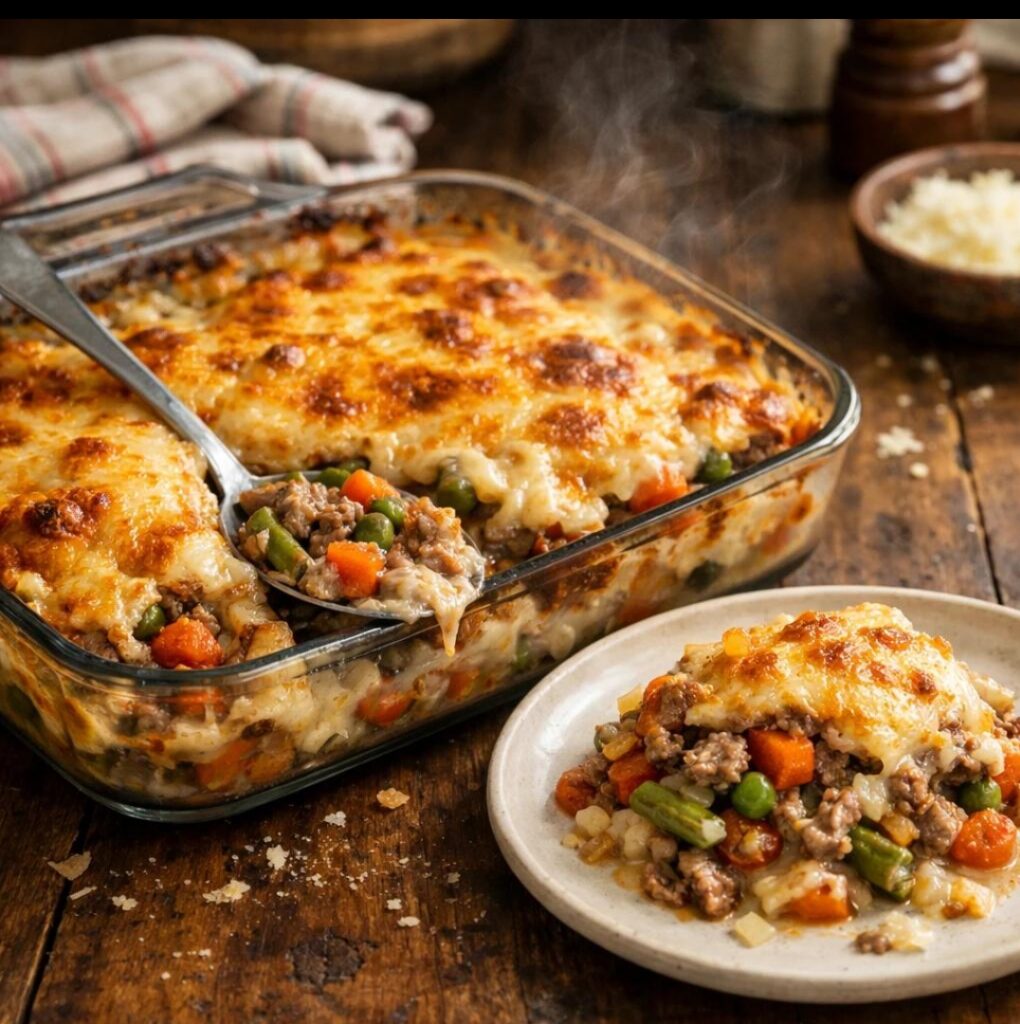
Cheesy Ground Beef and Vegetable Casserole
A cozy, hearty casserole made with savory ground beef, colorful mixed vegetables, creamy sauce, and a generous layer of golden melted cheese. This comforting family-style dinner is easy to prepare, filling, and perfect for busy weeknights, Sunday dinners, or whenever you want something warm and satisfying straight from the oven.
Introduction
There are some meals that feel like they were made for gathering everyone around the table, and this Cheesy Ground Beef and Vegetable Casserole is one of them. It combines tender seasoned ground beef with sweet carrots, green peas, green beans, and creamy potatoes, all tucked beneath a beautifully browned layer of melted cheese. The result is a comforting casserole with plenty of texture, savory flavor, and that irresistible golden top that makes everyone want the corner piece.
This recipe is especially useful when you want a satisfying dinner without preparing several separate side dishes. Everything comes together in one baking dish, making it wonderfully practical for family meals. The beef provides a rich savory base, while the vegetables add sweetness, freshness, and color. A creamy sauce brings the ingredients together, and the cheese creates a bubbling, golden crust as the casserole bakes.
You can prepare this casserole ahead of time, customize the vegetables according to what you have available, and even use leftover mashed potatoes to make dinner preparation faster. Serve it with a simple green salad, roasted vegetables, or warm bread for a complete comfort-food meal.
Why I Love It
I love this casserole because it delivers the kind of hearty, homemade flavor that makes an ordinary dinner feel special. The combination of seasoned beef, tender vegetables, creamy filling, and golden cheese is incredibly satisfying. Every spoonful gives you a little bit of everything, so there is no need to build a complicated plate with multiple dishes.
Another reason this recipe works so well is its flexibility. You can use ground beef, ground turkey, or even leftover cooked chicken. The vegetables can also change depending on the season or what is sitting in your refrigerator. Peas, carrots, corn, green beans, mushrooms, and diced bell peppers all work nicely. It is the kind of recipe that welcomes substitutions rather than demanding perfection.
The golden cheese topping is probably my favorite part. As the casserole bakes, the cheese melts into the creamy filling and develops toasted golden spots around the surface. Those browned areas add a deeper flavor and a little texture that contrasts beautifully with the soft vegetables and creamy potatoes underneath.
It is also an excellent make-ahead dinner. Assemble the casserole earlier in the day, refrigerate it, and bake it when you are ready. That makes it especially convenient for busy evenings, family gatherings, and casual entertaining.
What Makes It Special
What makes this casserole stand out is the balance of textures and flavors. Ground beef gives the filling a rich and savory character, while carrots bring gentle sweetness and peas provide small bursts of freshness. Green beans add another layer of texture, keeping the filling from becoming completely soft.
The creamy sauce is the bridge that brings everything together. It coats the beef and vegetables without making the casserole watery. When topped with mashed potatoes and cheese, the casserole becomes wonderfully rich without requiring complicated cooking techniques.
The oven does the final bit of magic. During baking, the filling becomes hot and bubbly while the cheese melts and turns golden brown. The result is a dish that looks rustic and inviting straight from the baking dish.
- One-dish comfort food: The main components cook together in one casserole.
- Family friendly: Mild seasoning and familiar ingredients make it approachable.
- Flexible vegetables: Use fresh, frozen, or leftover vegetables.
- Make-ahead friendly: Assemble it earlier and bake when needed.
- Golden cheese topping: A bubbly, browned cheese layer finishes the dish beautifully.
- Great leftovers: The flavors become even more developed after resting overnight.
How to Make
This casserole is straightforward to prepare. Start by cooking the ground beef until browned and flavorful, then add the vegetables and creamy sauce. Prepare the mashed potato topping separately if you are not using leftovers. Layer everything in a baking dish, cover the top with cheese, and bake until bubbling and beautifully golden.
Ingredients
For the Beef and Vegetable Filling
- 1 pound ground beef
- 1 tablespoon olive oil, if needed
- 1 small yellow onion, finely diced
- 2 cloves garlic, minced
- 1 cup diced carrots
- 1 cup green peas, fresh or frozen
- 1 cup chopped green beans, fresh or frozen
- 1/2 cup diced corn, optional
- 1 teaspoon salt, or to taste
- 1/2 teaspoon black pepper
- 1 teaspoon paprika
- 1/2 teaspoon dried thyme
- 1 tablespoon all-purpose flour
- 1 cup beef broth
- 1/2 cup milk or heavy cream
- 1 tablespoon Worcestershire sauce
For the Potato Topping
- 3 cups prepared mashed potatoes
- 2 tablespoons butter
- 2 to 3 tablespoons milk, as needed
- 1/4 teaspoon salt
- 1/4 teaspoon black pepper
For the Cheese Topping
- 1 1/2 cups shredded cheddar cheese
- 1/2 cup shredded mozzarella cheese
- 2 tablespoons grated Parmesan cheese, optional
- 1 tablespoon chopped fresh parsley, for garnish
Step 1: Prepare the Oven and Baking Dish
Preheat the oven to 375°F (190°C). Lightly grease a 9-by-13-inch baking dish with cooking spray, butter, or a small amount of olive oil. Greasing the dish helps prevent the filling from sticking around the edges and makes serving easier.
If you are preparing the casserole ahead of time, you can assemble it in a refrigerator-safe baking dish and cover it tightly until you are ready to bake. Allowing a chilled casserole to sit at room temperature for about 15 to 20 minutes before baking can help it heat more evenly.
Step 2: Brown the Ground Beef
Heat a large skillet over medium-high heat. Add the ground beef and cook, breaking it apart with a wooden spoon or spatula. Continue cooking until the meat is browned and no longer pink.
If there is a large amount of excess grease in the skillet, carefully drain it. Leaving a small amount of fat can help carry flavor, but removing excess grease keeps the finished casserole from becoming heavy.
Step 3: Add the Aromatics
Add the diced onion and cook for approximately 3 to 4 minutes, stirring occasionally, until it begins to soften. Add the minced garlic and cook for another 30 to 60 seconds.
Be careful not to burn the garlic. Once it becomes fragrant, move quickly to the next step. Burnt garlic can introduce a bitter flavor that is difficult to balance later.
Step 4: Add the Vegetables
Stir in the diced carrots, green peas, green beans, and corn if using. Cook the vegetables with the beef for approximately 4 to 6 minutes. Frozen vegetables can be added directly without thawing.
The vegetables do not need to be completely tender at this stage because they will continue cooking in the oven. The goal is simply to begin softening them and combine their flavors with the seasoned beef.
Step 5: Season the Filling
Add salt, black pepper, paprika, and dried thyme. Stir well so the seasonings coat the beef and vegetables evenly. Add Worcestershire sauce and mix again.
Taste the mixture before adding additional salt. The beef broth and cheese will also contribute saltiness, so it is better to season gradually rather than over-season the filling at the beginning.
Step 6: Make the Creamy Sauce
Sprinkle the flour over the beef and vegetables. Stir continuously for about one minute. The flour helps thicken the liquid and creates a creamy consistency without making the filling runny.
Slowly pour in the beef broth while stirring. Add the milk or heavy cream and continue stirring. Bring the mixture to a gentle simmer and cook for about 3 to 5 minutes, or until the sauce thickens enough to lightly coat the back of a spoon.
Do not make the sauce excessively thick at this stage. The casserole will continue cooking in the oven, and the vegetables will release a small amount of moisture as they heat.
Step 7: Prepare the Mashed Potatoes
If you are using freshly prepared mashed potatoes, make sure they are smooth but still thick enough to spread. Stir in butter, milk, salt, and black pepper according to taste.
Leftover mashed potatoes are excellent for this recipe. If they have become very firm in the refrigerator, warm them slightly and stir in a splash of milk before spreading them over the casserole.
Step 8: Assemble the Casserole
Transfer the beef and vegetable filling into the prepared baking dish. Spread it into an even layer using the back of a spoon or spatula.
Spoon the mashed potatoes over the filling. Gently spread the potatoes across the surface, covering as much of the filling as possible. You can create small ridges in the potato layer with a fork. Those ridges become lightly browned during baking and add extra texture.
Step 9: Add the Cheese
Sprinkle the shredded cheddar and mozzarella evenly over the mashed potatoes. Add Parmesan if desired.
For the most attractive golden crust, make sure the cheese is distributed evenly rather than forming one extremely thick mound in the center. A balanced layer melts more consistently and allows the surface to brown beautifully.
Step 10: Bake
Place the casserole in the preheated oven and bake at 375°F (190°C) for approximately 25 to 30 minutes, or until the filling is hot and bubbling around the edges and the cheese is melted and golden brown.
If you want a deeper golden finish, turn on the broiler for the final 1 to 2 minutes. Watch it closely because cheese can go from beautifully browned to burnt surprisingly quickly.
Step 11: Rest Before Serving
Remove the casserole from the oven and allow it to rest for approximately 10 minutes before serving. This short resting period gives the creamy filling time to settle, making it easier to scoop and serve without the layers sliding apart.
Sprinkle chopped fresh parsley over the top just before serving for a fresh finishing touch.
Time & Temperature Maintaining
Temperature control is important for getting the best texture from this casserole. Bake at 375°F (190°C) so the filling becomes hot without drying out while the cheese has enough time to melt and brown.
- Preparation Time: 25 minutes
- Cooking Time: 30 minutes
- Resting Time: 10 minutes
- Total Time: Approximately 1 hour 5 minutes
- Oven Temperature: 375°F (190°C)
Keeping the Filling Moist
Avoid baking the casserole for significantly longer than necessary. Overbaking can cause the filling to lose moisture and can make the mashed potato topping dry around the edges. If the casserole is already hot and the cheese is deeply golden, it is ready to come out.
For a Chilled Make-Ahead Casserole
If the assembled casserole has been refrigerated, it may require additional baking time. Cover it loosely with aluminum foil for the first part of baking to prevent the cheese from browning too quickly. Remove the foil toward the end so the cheese can become golden.
For the Best Golden Top
Use the broiler only at the end if you want extra browning. Keep the casserole several inches away from the broiler element and watch it continuously. The difference between golden cheese and burnt cheese can be only a minute or two.
Serving Suggestions
This casserole is filling enough to serve as a complete main course, but a simple side can make the meal feel even more balanced. A crisp green salad with a light vinaigrette provides freshness against the creamy casserole.
Steamed broccoli, roasted asparagus, sautéed spinach, or a simple cucumber salad are also excellent choices. For a more indulgent meal, serve it with warm dinner rolls or crusty bread for scooping up the creamy beef and vegetable filling.
- Fresh green salad
- Roasted broccoli
- Steamed green vegetables
- Garlic bread
- Warm dinner rolls
- Simple cucumber salad
- Roasted asparagus
Easy Recipe Variations
Use Ground Turkey
Ground turkey can replace ground beef for a lighter variation. Because turkey is generally leaner, add a little olive oil while cooking and make sure the creamy sauce is well seasoned.
Add Mushrooms
Sliced mushrooms add an earthy flavor that works particularly well with beef. Sauté them with the onion before adding the remaining vegetables.
Make It Extra Cheesy
Add an additional handful of cheddar or mozzarella to the topping. You can also stir a small amount of cheese into the creamy filling for an even richer casserole.
Add Bell Peppers
Diced red, yellow, or green bell peppers bring sweetness and color to the filling. Sauté them with the onion before adding the beef broth.
Use Sweet Potatoes
Replace traditional mashed potatoes with mashed sweet potatoes for a subtle sweetness that pairs beautifully with savory ground beef and vegetables.
Storage and Reheating
Allow leftover casserole to cool before transferring it to an airtight container or covering the baking dish tightly. Refrigerate leftovers and enjoy them within a few days for the best quality.
To reheat individual portions, place them in a microwave-safe dish and heat until warmed through. For larger portions, reheat in a covered oven-safe dish at a moderate temperature until hot.
If reheating in the oven, covering the casserole with foil helps prevent the potato and cheese topping from drying out. Remove the foil near the end if you want to restore some of the crisp golden texture.
FAQ
Can I make this casserole ahead of time?
Yes. You can assemble the casserole, cover it tightly, and refrigerate it until you are ready to bake. If it is very cold when it goes into the oven, expect the baking time to increase slightly. Make sure the center is thoroughly heated before serving.
Can I use frozen vegetables?
Absolutely. Frozen peas, carrots, corn, and green beans are convenient choices. You generally do not need to thaw them first. Add them directly to the skillet and cook until the mixture is heated and the vegetables begin to soften.
Can I use leftover mashed potatoes?
Yes, and they are one of the easiest ways to make this casserole. If the potatoes are firm after refrigeration, stir in a little milk and butter to make them easier to spread.
What cheese works best?
Cheddar is an excellent choice because it provides a rich, savory flavor and melts well. Mozzarella adds extra stretch and a mild flavor. Monterey Jack, Colby Jack, or a cheddar blend can also be used.
Can I make this without cheese?
Yes. The casserole will still be delicious without cheese, although you will lose the rich browned topping. If desired, brush the potato layer with a little melted butter before baking to encourage light browning.
Why is my casserole watery?
Excess liquid can come from vegetables, particularly frozen vegetables, or from using too much broth or milk. Make sure the sauce has thickened before assembling the casserole. Also avoid covering the casserole tightly during the entire baking process, as trapped steam can increase moisture.
How do I get the cheese extra golden?
Bake until the casserole is bubbling, then briefly use the broiler to brown the cheese. Keep a close eye on it because the topping can brown very quickly.
Can I freeze this casserole?
Yes. For best results, assemble the casserole in a freezer-safe dish and cool the ingredients completely before freezing. Wrap it securely to protect against freezer burn. Thaw it safely in the refrigerator before reheating and baking.
Can I use another type of meat?
Ground turkey, ground chicken, or a mixture of ground meats can work well. Adjust the seasonings according to the meat you choose and make sure