
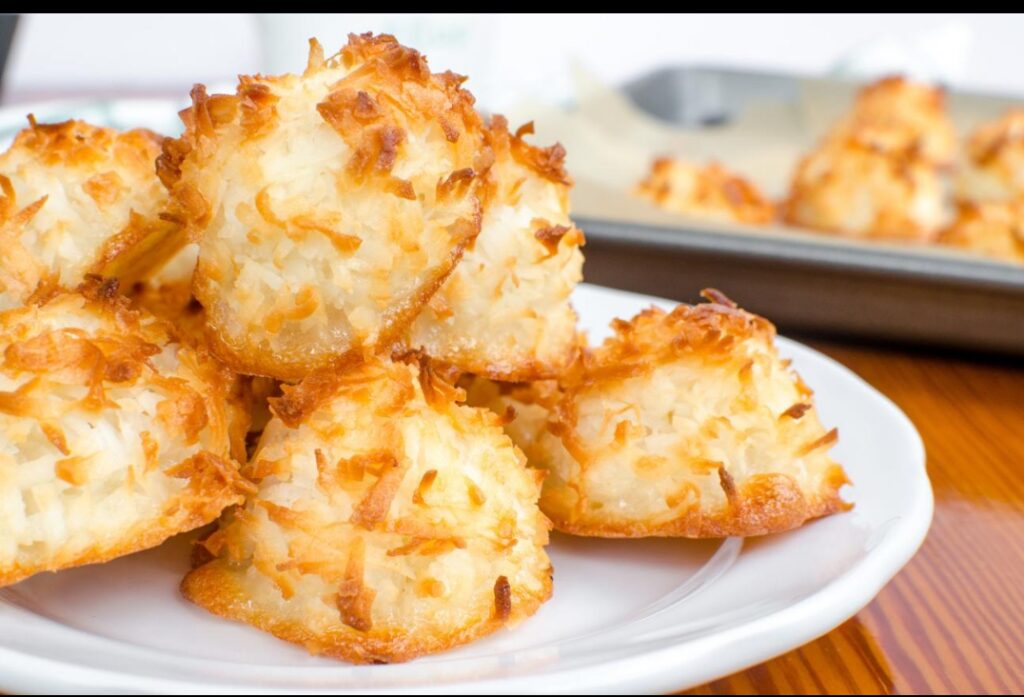
Golden Coconut Macaroons
Introduction
These Golden Coconut Macaroons are a simple, delicious treat made with sweet shredded coconut, egg whites, sugar, and vanilla. Each macaroon develops a beautifully toasted golden exterior while staying soft, chewy, and tender in the center. They are naturally gluten-free and require only a handful of everyday ingredients, making them an easy dessert for busy afternoons, holiday baking, cookie trays, or casual family gatherings.
The combination of crisp toasted coconut around the edges and a moist coconut-filled center makes these cookies especially satisfying. They are small enough for a quick sweet bite but flavorful enough to feel like a special homemade dessert. With their golden color and rustic shape, coconut macaroons also look beautiful arranged on a dessert platter.
This recipe focuses on achieving the ideal texture without making the macaroons complicated. The coconut mixture is gently combined, portioned onto a baking sheet, and baked until the edges become golden brown. Allowing them to cool properly helps the cookies firm up while keeping their centers pleasantly chewy.
Why I Love It
I love these coconut macaroons because they are incredibly easy to prepare while still tasting like something made for a special occasion. There is no complicated dough, rolling, or decorating required. The ingredients come together quickly, and the oven does most of the work.
The toasted coconut gives every bite a wonderful combination of sweetness and texture. The outside becomes lightly crisp and golden, while the inside remains soft and chewy. They are especially delicious with coffee, tea, hot chocolate, or a glass of cold milk.
Another reason this recipe is so useful is that it works beautifully for holidays, cookie exchanges, afternoon treats, and homemade gift boxes. Their simple appearance gives them a charming homemade character, while their rich coconut flavor makes them feel much more special than an ordinary cookie.
What Makes It Special
The star ingredient in these macaroons is shredded coconut. Coconut provides the characteristic chewy texture and rich tropical flavor that makes macaroons so recognizable. Toasting during baking also brings out a deeper, nuttier flavor and creates the beautiful golden edges shown in the finished cookies.
Egg whites help bind the ingredients together while giving the macaroons structure. Sugar provides sweetness and encourages the edges to caramelize gently during baking. A small amount of vanilla extract balances the coconut flavor and adds a warm bakery-style aroma.
The most important part of the recipe is avoiding excessive mixing or overbaking. The mixture should hold together when shaped, and the cookies should be removed from the oven once the edges and surface are golden. They will continue to set as they cool.
How to Make
Ingredients
- 3 cups sweetened shredded coconut
- 3 large egg whites
- 1/2 cup granulated sugar
- 1 teaspoon vanilla extract
- 1/4 teaspoon salt
- 2 tablespoons all-purpose flour, optional for additional structure
For the best texture, use shredded coconut that is fresh and evenly sized. If you prefer a less sweet macaroon, unsweetened shredded coconut can be used, although the final texture and sweetness will be slightly different.
Instructions
- Prepare the oven: Preheat the oven to 325°F (165°C). Line a baking sheet with parchment paper. The parchment helps prevent the coconut from sticking and makes cleanup easier.
- Combine the dry ingredients: Add the shredded coconut, sugar, salt, and optional flour to a large mixing bowl. Stir gently until the ingredients are evenly distributed.
- Prepare the egg whites: Place the egg whites in a clean bowl. Whisk them lightly until they become slightly foamy. There is no need to whip them into stiff peaks for this recipe.
- Add vanilla: Stir the vanilla extract into the egg whites. The vanilla adds a warm flavor that complements the toasted coconut.
- Make the macaroon mixture: Pour the egg-white mixture over the shredded coconut mixture. Stir gently with a spatula until the coconut is evenly coated and the mixture begins to hold together.
- Check the consistency: The mixture should be moist enough to stick together when pressed but should not be watery. If it feels unusually loose, allow it to rest for a few minutes so the coconut can absorb some of the moisture.
- Shape the macaroons: Use a spoon or cookie scoop to portion the mixture onto the prepared baking sheet. Gently press each portion together to create compact mounds. Leave a little space between each macaroon.
- Shape carefully: Avoid packing the mixture too tightly. A lightly pressed mound gives the finished macaroons a pleasant texture and allows the heat to reach the center evenly.
- Bake: Place the baking sheet in the preheated oven and bake for approximately 18 to 22 minutes, or until the tops and edges become golden brown.
- Watch the edges: The edges should look toasted and lightly caramelized, while the centers should remain lighter. If your oven runs hot, begin checking a few minutes early.
- Cool: Remove the baking sheet from the oven and allow the macaroons to cool on the baking sheet for approximately 5 to 10 minutes. They will be delicate while hot.
- Transfer: Once they have firmed slightly, carefully transfer the macaroons to a wire rack and allow them to cool completely.
- Serve: Serve the coconut macaroons once completely cooled. They can be enjoyed on their own or paired with coffee, tea, hot chocolate, or milk.
Optional Chocolate Finish
For a more decadent dessert, allow the macaroons to cool completely and drizzle them with melted semi-sweet or dark chocolate. You can also dip the bottoms of the cookies into melted chocolate and let them set on parchment paper. The chocolate adds a rich contrast to the sweet toasted coconut.
Time & Temperature Maintaining
Maintaining the correct oven temperature is important for achieving golden edges without drying out the centers. Bake the macaroons at 325°F (165°C) for approximately 18 to 22 minutes.
Every oven behaves slightly differently, so use the appearance of the macaroons as the final guide. They should have lightly browned edges and a golden surface. The center should not look wet, but it should still appear soft.
Avoid increasing the oven temperature simply to shorten the cooking time. A hotter oven can brown the coconut too quickly while leaving the inside undercooked or causing the finished macaroons to become dry.
If your macaroons are browning too quickly, move the baking sheet to a slightly lower rack or reduce the temperature slightly. If they remain pale after the expected baking time, continue baking in short increments while watching them closely.
Letting the cookies cool on the baking sheet is also part of the process. The residual heat helps the macaroons finish setting without requiring additional oven time.
FAQ
Can I use unsweetened coconut?
Yes. Unsweetened shredded coconut can be used, especially if you prefer desserts that are less sweet. The final macaroon will have a slightly different texture and flavor because sweetened coconut contains additional moisture and sugar.
Why are my coconut macaroons falling apart?
The mixture may not contain enough binding moisture, or the portions may not have been gently compacted before baking. Make sure the coconut is evenly coated with the egg-white mixture and press each mound together lightly before placing it on the baking sheet.
Why did my macaroons become too dry?
Overbaking is one of the most common causes of dry macaroons. Remove them once the edges and surface become golden. The centers should remain soft, as they will continue to set while cooling.
Can I make these ahead of time?
Yes. Coconut macaroons are excellent make-ahead cookies. Once completely cooled, store them in an airtight container at room temperature for several days.
Should coconut macaroons be refrigerated?
They generally do not need refrigeration when stored properly in an airtight container. Refrigeration can make the texture firmer. If your kitchen is particularly warm or you have added a perishable filling or topping, refrigeration may be appropriate.
Can I freeze coconut macaroons?
Yes. Place completely cooled macaroons in an airtight freezer-safe container with parchment paper between layers. Freeze for up to a few months for best quality. Thaw them at room temperature before serving.
Can I add chocolate?
Absolutely. Melted dark, semi-sweet, or milk chocolate pairs especially well with coconut. You can drizzle the chocolate over the cooled macaroons or dip the bottoms into melted chocolate.
How do I keep the macaroons from sticking?
Line the baking sheet with parchment paper or a silicone baking mat. Allow the macaroons to cool for several minutes before moving them because they are more fragile immediately after baking.
Can I use a cookie scoop?
Yes. A cookie scoop is an easy way to create evenly sized macaroons. Consistent portions also help the cookies bake at the same rate.
How do I know when they are done?
Look for golden-brown edges and a lightly toasted surface. The center should look set but remain soft. Avoid waiting until the entire macaroon becomes dark brown because this can result in a dry texture.
Serving Suggestions
These Golden Coconut Macaroons are delicious served at room temperature alongside a cup of coffee or tea. They also make a beautiful addition to holiday cookie platters, afternoon dessert tables, brunch spreads, and homemade gift boxes.
For a simple presentation, arrange the macaroons on a white serving plate and add a few toasted coconut flakes around them. For a richer dessert, serve them with melted chocolate, fresh berries, vanilla ice cream, or a light drizzle of chocolate sauce.
Storage Tips
Allow the macaroons to cool completely before storing them. Place them in an airtight container and keep them at room temperature. Separate layers with parchment paper if necessary to prevent the cookies from sticking together.
Properly stored macaroons can maintain their texture for several days. For longer storage, freeze them in a sealed freezer-safe container. Allow frozen macaroons to thaw naturally at room temperature before serving.
Recipe Notes
- Use fresh shredded coconut for the best flavor and texture.
- Do not overmix the coconut mixture.
- Shape the mixture into compact but not overly compressed mounds.
- Use parchment paper to prevent sticking.
- Watch the macaroons closely during the final few minutes of baking.
- Allow the cookies to cool before transferring them from the baking sheet.
- For extra flavor, add a small amount of almond extract along with the vanilla.
- Chocolate can be added after the macaroons have cooled completely.
Final Thoughts
These Golden Coconut Macaroons are proof that a simple ingredient list can create an impressive homemade dessert. With toasted golden coconut on the outside and a soft, chewy center, every bite delivers the texture and flavor that make coconut macaroons so popular.
The recipe is straightforward enough for everyday baking but special enough for holidays, celebrations, cookie exchanges, and dessert tables. Once you master the basic mixture and baking time, you can easily customize the macaroons with chocolate, almond extract, or other favorite additions.
Serve them slightly warm for a soft, fragrant bite or allow them to cool completely for a firmer chewy texture. Either way, these coconut macaroons make an easy and satisfying treat that can disappear from the dessert plate surprisingly quickly.