

Mongolian Beef
Introduction
Mongolian Beef is a delicious takeout-style dinner made with tender strips of beef coated in a glossy, savory-sweet sauce. It is one of those recipes that can make an ordinary weeknight dinner feel like something special. The beef is lightly coated, cooked until beautifully browned, and then tossed with a rich sauce made from soy sauce, brown sugar, garlic, ginger, and a few simple seasonings. Fresh green onions and sesame seeds add color, texture, and a little freshness to every bite.
What makes this recipe especially appealing is how quickly it comes together. You do not need a long list of complicated ingredients or hours of cooking. Once the beef is sliced and the sauce ingredients are prepared, the dish cooks quickly in a hot skillet. The result is tender beef covered in a flavorful sauce that is perfect over steamed white rice, brown rice, fried rice, or noodles.
This homemade Mongolian Beef is also easy to customize. You can make the sauce sweeter or more savory, add extra garlic and ginger, or include vegetables such as broccoli, bell peppers, snap peas, or carrots. The combination of caramelized beef, glossy sauce, fresh green onions, and toasted sesame seeds creates a satisfying balance of flavors and textures.
If you enjoy easy Asian-inspired dinners, this recipe is a great one to keep in your regular meal rotation. It is comforting, flavorful, family-friendly, and simple enough for a busy evening.
Why I Love It
I love Mongolian Beef because it delivers restaurant-style flavor without requiring restaurant-style effort. The beef develops a beautiful browned exterior while the sauce becomes thick, shiny, and incredibly flavorful. Every piece gets coated with that rich sauce, making each bite savory, slightly sweet, garlicky, and satisfying.
Another reason this recipe is a favorite is its versatility. It works beautifully as a quick weeknight dinner, but it can also be served when friends or family come over. The recipe can be paired with simple steamed rice and vegetables for a complete meal, or served alongside several Asian-inspired dishes for a larger dinner.
I also appreciate that most of the ingredients are easy to find. Soy sauce, brown sugar, garlic, ginger, green onions, and sesame seeds create a surprisingly flavorful sauce without needing a complicated pantry.
What Makes It Special
The secret to flavorful Mongolian Beef is the combination of properly prepared beef and a balanced sauce. Thinly sliced beef cooks quickly and gives you plenty of surface area for browning. A light coating of cornstarch helps create a slightly crisp exterior while also helping the sauce cling to the beef.
The sauce brings the entire dish together. Brown sugar provides sweetness and helps create a glossy finish, while soy sauce adds saltiness and deep umami flavor. Garlic and fresh ginger bring warmth and aromatic flavor. A small amount of sesame oil adds a nutty finish, while green onions provide freshness.
Cooking the beef in batches is another important detail. If the pan is overcrowded, the beef can release too much moisture and begin steaming instead of browning. A hot skillet and enough space between the pieces help create the caramelized edges that make this dish so delicious.
How to Make Mongolian Beef
Ingredients
- 1 1/2 pounds flank steak, thinly sliced against the grain
- 1/4 cup cornstarch
- 2 tablespoons neutral cooking oil, such as vegetable or canola oil
- 1/2 cup low-sodium soy sauce
- 1/3 cup packed brown sugar
- 1/2 cup water
- 4 cloves garlic, finely minced
- 1 tablespoon fresh ginger, finely grated
- 1 teaspoon sesame oil
- 1/2 teaspoon freshly ground black pepper
- 4 green onions, sliced into 1-inch pieces
- 1 tablespoon toasted sesame seeds, for garnish
- 1/4 teaspoon red pepper flakes, optional
- Steamed white rice, for serving
Instruction
- Prepare the beef: Pat the flank steak dry with paper towels. Slice the beef thinly against the grain into bite-sized strips. Cutting against the grain shortens the muscle fibers and helps the cooked beef feel more tender when you bite into it.
- Coat the beef: Place the sliced beef in a large bowl and sprinkle the cornstarch over it. Toss thoroughly until each piece is lightly coated. Shake off any excess cornstarch. Let the coated beef rest for about 10 minutes while you prepare the sauce.
- Make the sauce: In a medium bowl, whisk together the soy sauce, brown sugar, water, minced garlic, grated ginger, sesame oil, black pepper, and optional red pepper flakes. Continue whisking until the brown sugar is mostly dissolved. Set the sauce aside.
- Heat the skillet: Place a large skillet or wok over medium-high to high heat. Add the cooking oil and allow it to become hot but not smoking. A properly heated pan helps the beef brown quickly instead of becoming soggy.
- Cook the beef: Add the beef to the hot skillet in a single layer. Avoid overcrowding the pan. Cook for approximately 2 to 3 minutes on the first side, then turn the pieces and cook for another 1 to 2 minutes, or until browned and cooked through.
- Cook in batches if needed: If all of the beef does not comfortably fit in the skillet, cook it in two or more batches. Add a small amount of additional oil between batches if necessary. Transfer the cooked beef to a clean plate while you finish the remaining pieces.
- Add the sauce: Once all the beef has been browned, reduce the heat to medium. Return the beef to the skillet and pour the prepared sauce over it. Stir gently so the sauce coats all of the beef.
- Simmer until glossy: Allow the beef and sauce to simmer for approximately 2 to 4 minutes. Stir frequently as the sauce thickens. The cornstarch from the beef will help the sauce become thicker and cling beautifully to each piece.
- Add the green onions: Add the sliced green onions during the final minute of cooking. Toss them with the beef so they soften slightly while retaining some freshness and color.
- Finish the dish: Remove the skillet from the heat once the sauce is thick, glossy, and coating the beef. Sprinkle toasted sesame seeds over the top.
- Serve: Serve the Mongolian Beef immediately over steamed white rice, brown rice, or noodles. Spoon extra sauce over the rice for even more flavor.
Time & Temperature Maintaining
Mongolian Beef is a relatively quick recipe, but controlling the cooking temperature makes a noticeable difference. Start with a hot skillet so the beef can develop browned edges quickly. Medium-high to high heat is ideal for searing the thin slices of beef.
Avoid cooking the beef for too long. Thin slices can become chewy if they are left in the skillet for an extended period. The exact cooking time depends on the thickness of the slices and the heat of your skillet, so look for browned edges and beef that is cooked through.
Once the sauce is added, lower the heat to medium. The goal is a gentle simmer rather than aggressive boiling. A gentle simmer gives the sauce enough time to thicken while allowing the beef to absorb the flavor without becoming overcooked.
For food safety, beef should be cooked to a safe internal temperature appropriate for the cut and preparation. If using a food thermometer, check the thickest pieces rather than relying only on appearance.
For the best texture, serve the beef immediately after the sauce thickens. If you need to keep it warm, use low heat and avoid prolonged simmering because the sauce can become overly thick and the beef can lose its tenderness.
Serving Suggestions
The easiest way to serve Mongolian Beef is over freshly steamed white rice. The rice absorbs the glossy sauce and creates a balanced bite with the savory beef. Jasmine rice is particularly good because its fragrant aroma works beautifully with the garlic, ginger, and sesame flavors.
You can also serve this dish with brown rice, cauliflower rice, rice noodles, or stir-fried noodles. For additional vegetables, try steamed broccoli, roasted green beans, sautéed snap peas, bell peppers, carrots, or bok choy.
For a colorful dinner presentation, place the rice on one side of a shallow bowl, add the Mongolian Beef to the center, and finish with green onions and sesame seeds. A few extra sesame seeds scattered around the plate can add a restaurant-style finishing touch.
Recipe Tips
- Slice the beef thinly and always cut against the grain for a more tender texture.
- Pat the beef dry before adding cornstarch so the coating sticks properly.
- Do not overcrowd the skillet because this can prevent proper browning.
- Use fresh garlic and ginger whenever possible for stronger flavor.
- Cook the sauce only until it becomes glossy and thick enough to coat the beef.
- Add green onions near the end so they retain some freshness and color.
- Adjust the red pepper flakes according to your preferred level of heat.
- Serve immediately for the best combination of tender beef and glossy sauce.
FAQ
What cut of beef is best for Mongolian Beef?
Flank steak is a popular choice because it can be sliced thinly and cooks quickly. Sirloin steak, skirt steak, or another tender beef cut can also work well. Whatever cut you choose, slice it thinly against the grain.
Can I make Mongolian Beef less sweet?
Yes. The brown sugar controls much of the sweetness in the sauce. You can reduce the amount slightly if you prefer a more savory flavor. Keep in mind that reducing the sugar will also slightly change the thickness and caramelized finish of the sauce.
Can I make this recipe spicy?
Absolutely. Add red pepper flakes, thinly sliced fresh chili peppers, or a small amount of chili sauce to the sauce mixture. Start with a small quantity and increase it according to your preference.
Can I use another type of steak?
Yes. Thinly sliced sirloin, skirt steak, or another tender beef cut can be used. Avoid very tough cuts unless they are prepared using a method specifically designed to tenderize them.
Can I make Mongolian Beef without cornstarch?
You can, although the texture will be different. Cornstarch helps create a lightly crisp exterior and also contributes to the thick texture of the sauce. Without it, the beef will have less coating and the finished sauce may be thinner.
What should I serve with Mongolian Beef?
Steamed jasmine rice, white rice, brown rice, cauliflower rice, and noodles all pair well with this recipe. You can also serve it with steamed broccoli, snap peas, carrots, bok choy, or bell peppers.
Can I add vegetables to this recipe?
Yes. Broccoli, bell peppers, carrots, snap peas, mushrooms, and green beans are excellent additions. Cook the vegetables separately or add them to the skillet at the appropriate time so they remain crisp-tender rather than overcooked.
Can I prepare Mongolian Beef ahead of time?
You can prepare the sauce and slice the beef ahead of time. For the best texture, cook the beef close to serving time. If you have leftovers, store them in an airtight container in the refrigerator and reheat gently.
How do I store leftover Mongolian Beef?
Allow the leftovers to cool appropriately before transferring them to an airtight container. Refrigerate and use within a few days. Store the rice separately when possible so it can be reheated properly and does not absorb all of the sauce.
How do I reheat Mongolian Beef?
Reheat it gently in a skillet over medium-low heat. Add a small splash of water if the sauce has become too thick. Stir occasionally until heated through. Avoid prolonged high-heat cooking because it can make the beef tougher.
Why did my sauce become too thick?
The sauce can thicken quickly because of the cornstarch coating on the beef. If it becomes thicker than you want, add a small amount of water and stir over low heat until it reaches the desired consistency.
Why is my beef tough?
Beef can become tough if it is cut too thickly, sliced with the grain, or cooked for too long. Thinly slicing against the grain and using a hot skillet for a short cooking time can help maintain a tender texture.
Final Thoughts
Mongolian Beef is the kind of dinner that proves a homemade meal does not need to be complicated to feel special. Tender beef, a glossy soy-based sauce, garlic, ginger, fresh green onions, and sesame seeds come together in one skillet to create a comforting meal with plenty of flavor.
The recipe is quick enough for a busy weeknight but flavorful enough to serve for a family dinner or casual gathering. Pair it with steamed rice and your favorite vegetables, and you have a complete meal that is both satisfying and easy to customize.
For the best results, remember the small details: slice the beef against the grain, coat it lightly with cornstarch, keep the skillet hot, avoid overcrowding, and simmer the sauce only until it becomes glossy and thick. Those simple steps help create the tender texture and rich finish that make Mongolian Beef so enjoyable.
Whether you are craving an easy Asian-inspired dinner or looking for a homemade alternative to takeout, this Mongolian Beef recipe is a delicious addition to your recipe collection. Serve it hot, garnish generously with sesame seeds and green onions, and enjoy every saucy bite.
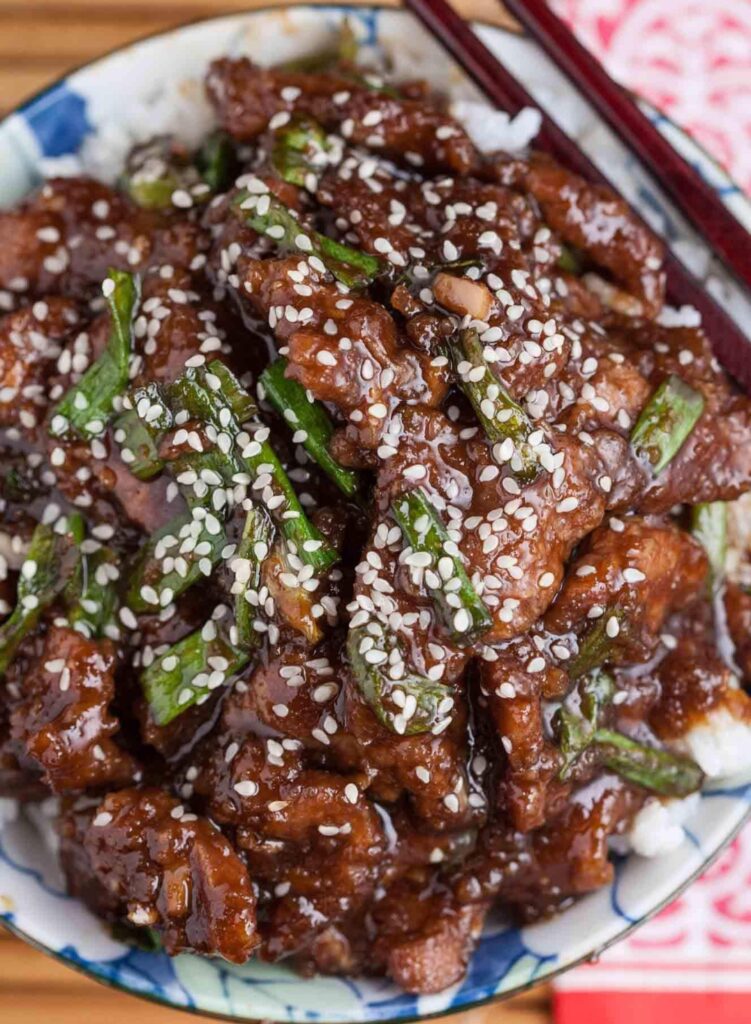

Mongolian Beef
Description
Mongolian Beef is a flavorful Asian-inspired dinner made with thinly sliced beef, a glossy soy sauce and brown sugar glaze, fresh garlic, ginger, and green onions. The beef is lightly coated with cornstarch and quickly pan-fried until beautifully browned, then tossed in the sweet and savory sauce. Finished with sesame seeds, this easy homemade dinner pairs perfectly with steamed rice or noodles.
Ingredients
Instructions
-
Pat the flank steak dry with paper towels, then slice it thinly against the grain into bite-sized strips.
-
Place the sliced beef in a large bowl and sprinkle with cornstarch. Toss well until all the pieces are lightly coated. Let the beef rest for about 10 minutes.
-
In a separate bowl, whisk together the soy sauce, brown sugar, water, minced garlic, grated ginger, sesame oil, black pepper, and red pepper flakes if using.
-
Heat a large skillet or wok over medium-high to high heat. Add the vegetable oil and let it heat until hot.
-
Add the beef in a single layer, working in batches if necessary. Cook for about 2–3 minutes on one side, then turn and cook for another 1–2 minutes, until the beef is nicely browned and cooked through.
-
Transfer the cooked beef to a plate and repeat with the remaining beef if needed.
-
Reduce the heat to medium and return all the beef to the skillet. Pour the prepared sauce over the beef and stir well to coat every piece.
-
Simmer for 2–4 minutes, stirring frequently, until the sauce becomes thick, glossy, and coats the beef.
-
Add the sliced green onions and toss for about 1 minute, allowing them to soften slightly while retaining their fresh flavor.
-
Remove the skillet from the heat and sprinkle the sesame seeds over the Mongolian Beef.
-
Serve immediately over steamed white rice, brown rice, or noodles, with extra green onions and sesame seeds for garnish.
Note
For the most tender beef, slice the steak thinly against the grain. Do not overcrowd the skillet while cooking, as this can prevent the beef from browning properly. Adjust the brown sugar to make the sauce more or less sweet, and add red pepper flakes if you prefer a little heat. Serve immediately over steamed jasmine rice, brown rice, or noodles. For a complete meal, add steamed broccoli, snap peas, bell peppers, or carrots.